
Choosing the Right Mounting Bracket
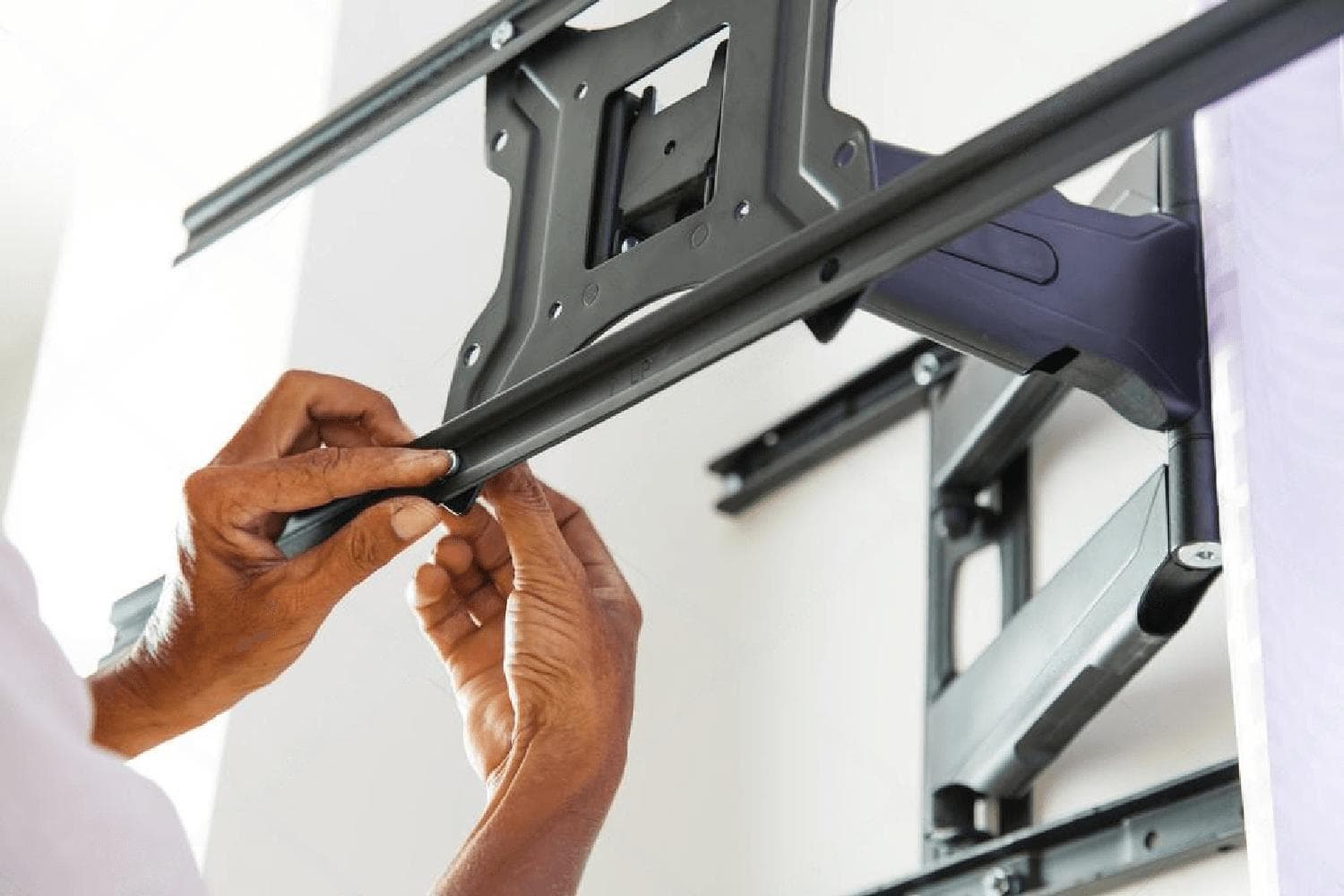
Short answer: it all comes down to where the TV will be viewed—well, viewed most of the time. Start by identifying the primary seat, then note secondary viewing areas and any windows or lights that may create glare. Before style enters the decision, confirm that the bracket supports your TV’s size and weight and matches its VESA mounting-hole pattern. The wall structure and fasteners must also support the complete installation.
Flat-Fixed Mount
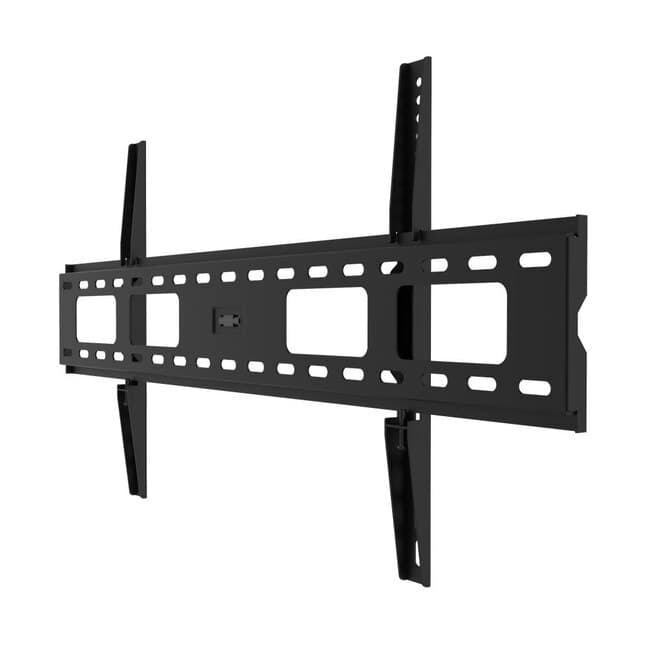
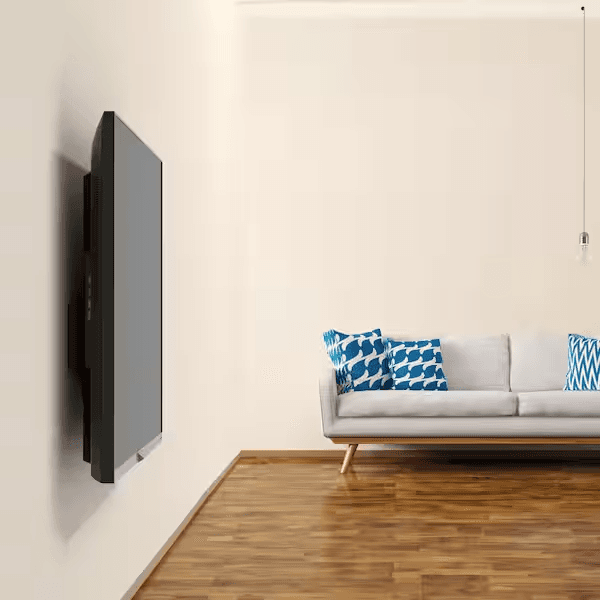
A flat, or fixed, mount holds the TV close to the wall, with no tilt, swivel, or extension. It’s the simplest, most stable, and usually least expensive option, and works best when the TV sits at eye level with one seat facing it head-on. The tradeoff is permanence—the angle can’t be adjusted to cut glare, and the tight wall gap makes rear port access harder than any other mount type.
Flat Tilting Mount
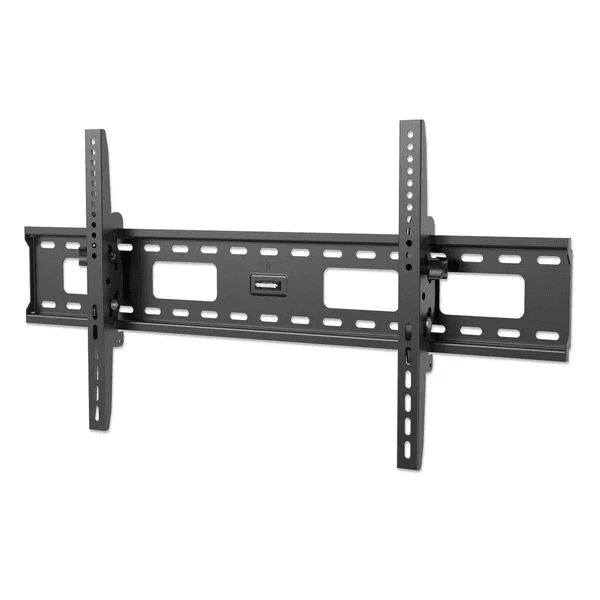
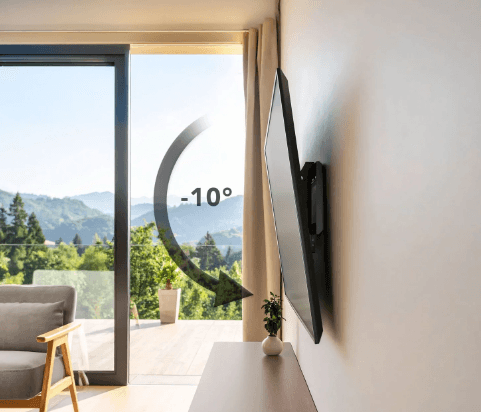
A tilting mount adds a hinge that angles the screen up or down, usually 5 to 15 degrees, while staying fixed side to side. That adjustment matters most when a TV sits above eye level—over a fireplace, or facing a bed—where tilting down reduces glare and eases the angle on your neck. It sits slightly farther off the wall than a flat mount for hinge clearance, and still can’t swivel toward a seat that’s off to one side.
Full Motion (Swivel) Mount
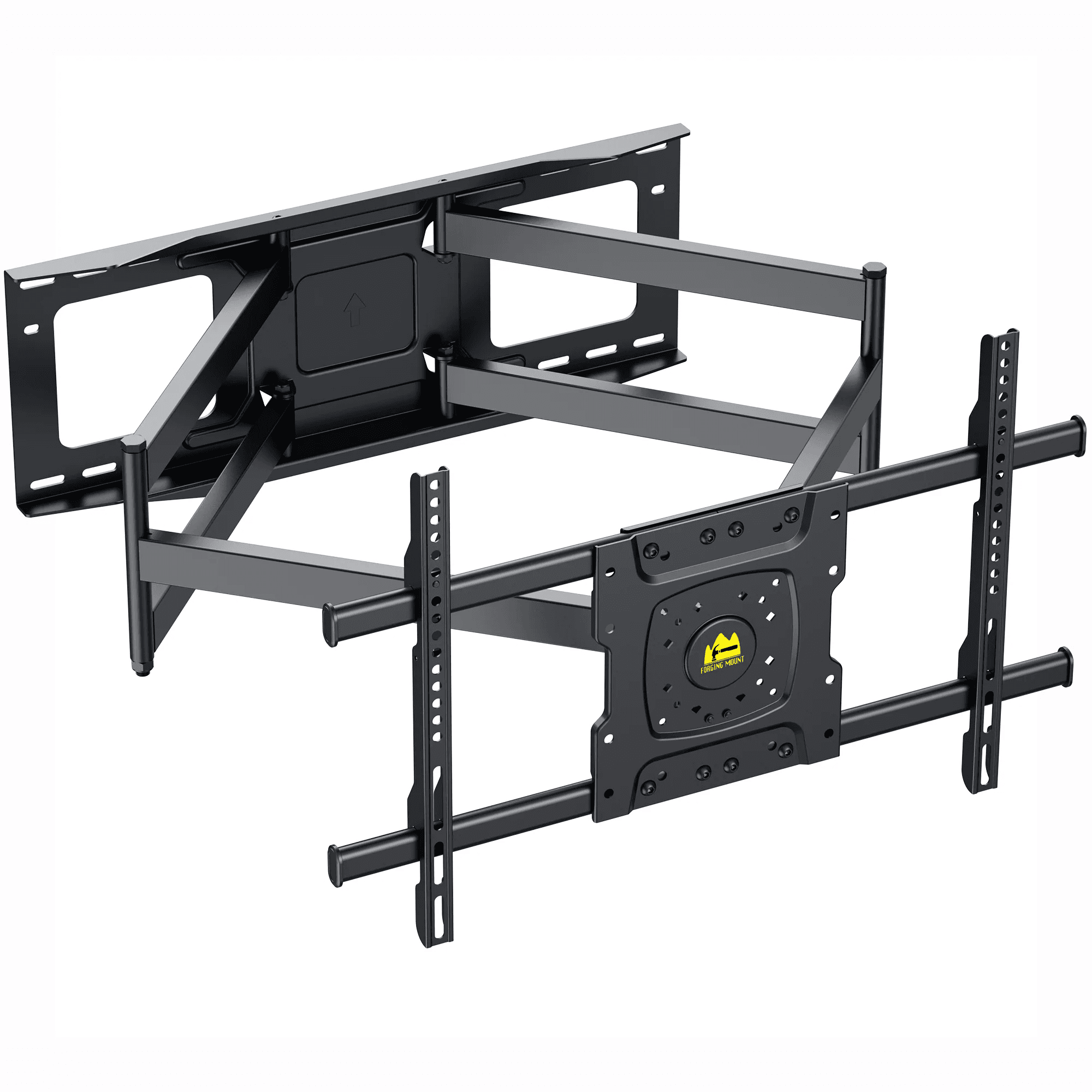
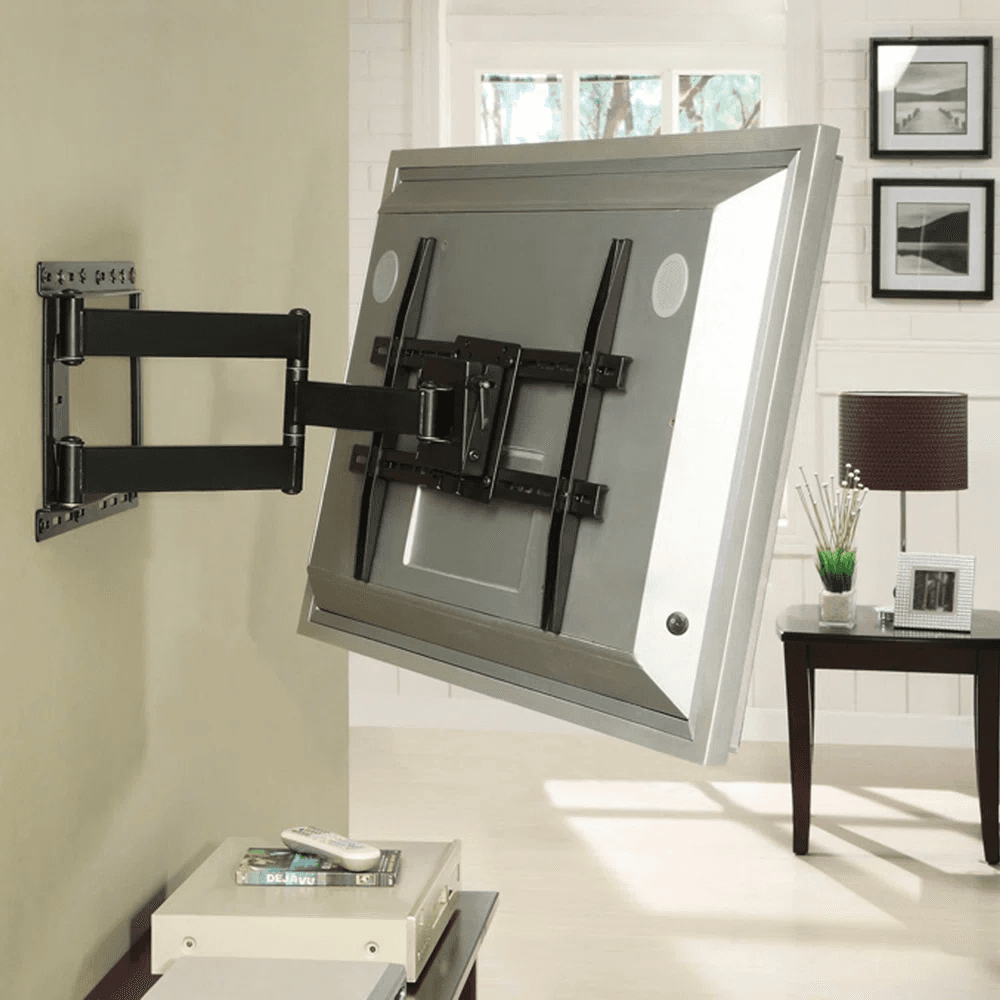
A full-motion, or articulating, mount uses a multi-joint arm that extends the TV out from the wall, then swivels side to side and tilts up and down. It suits open floor plans, rooms with more than one seating area, or installs where reaching cables behind the TV matters. The tradeoff is cost and structural demand: extended out, the arm puts real leverage on the wall, so it needs a properly rated bracket anchored into studs, not drywall alone.
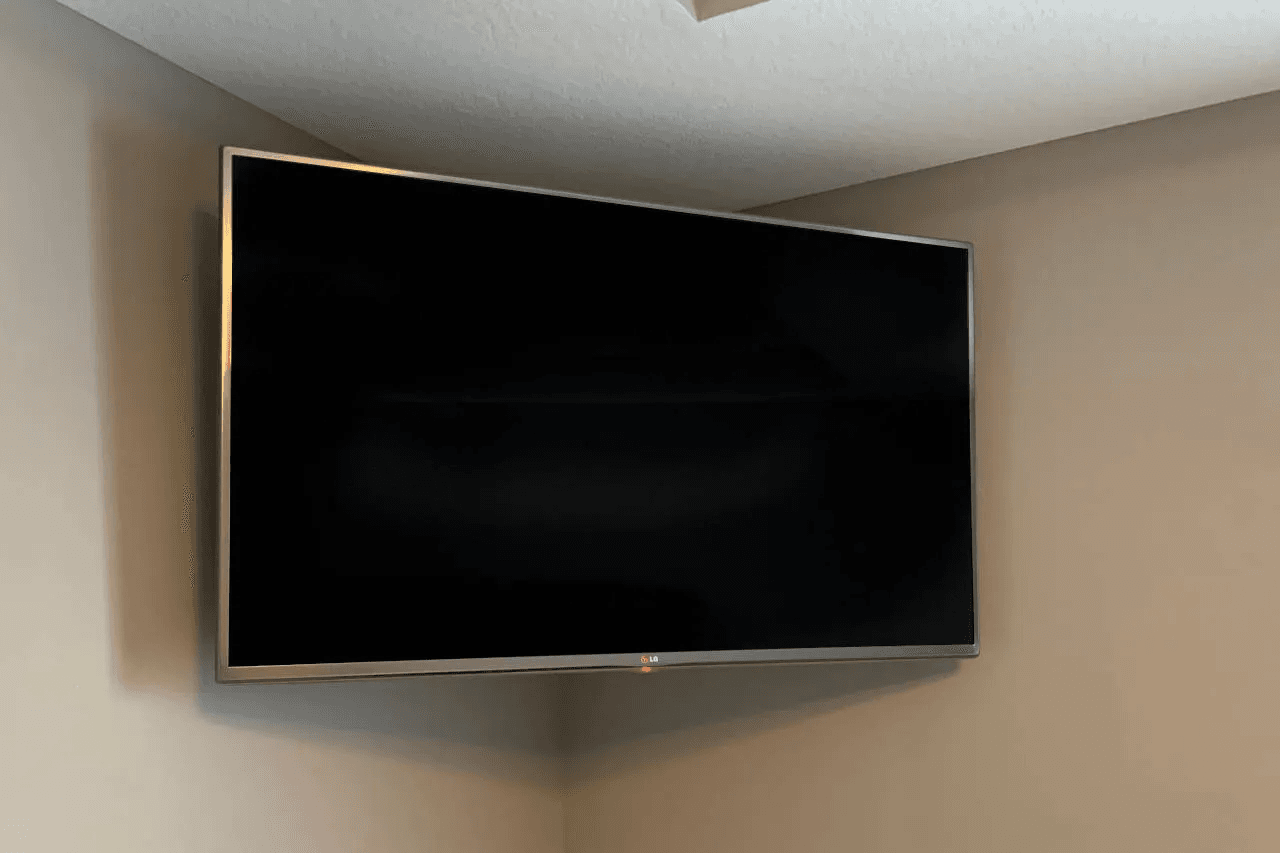
Corner Mount
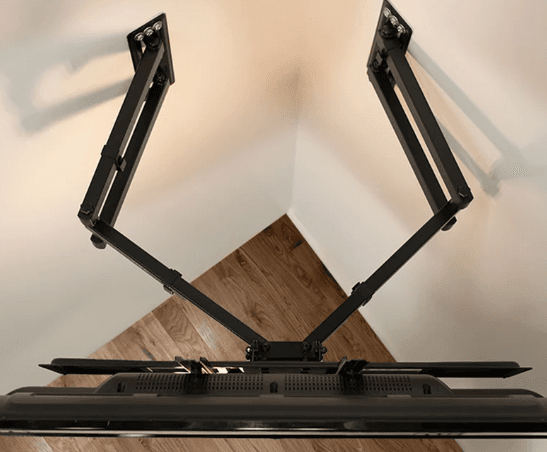
“Corner mount” describes the placement more than a separate mechanism—most corner installations use a full-motion mount with enough extension and swivel to clear the adjacent wall. It’s a strong option when no broad wall works, reclaiming space a flat or tilting mount couldn’t use. The drawbacks: measuring arm clearance, routing cable around the corner, and finding solid studs at an odd angle all take more care than a flat installation.
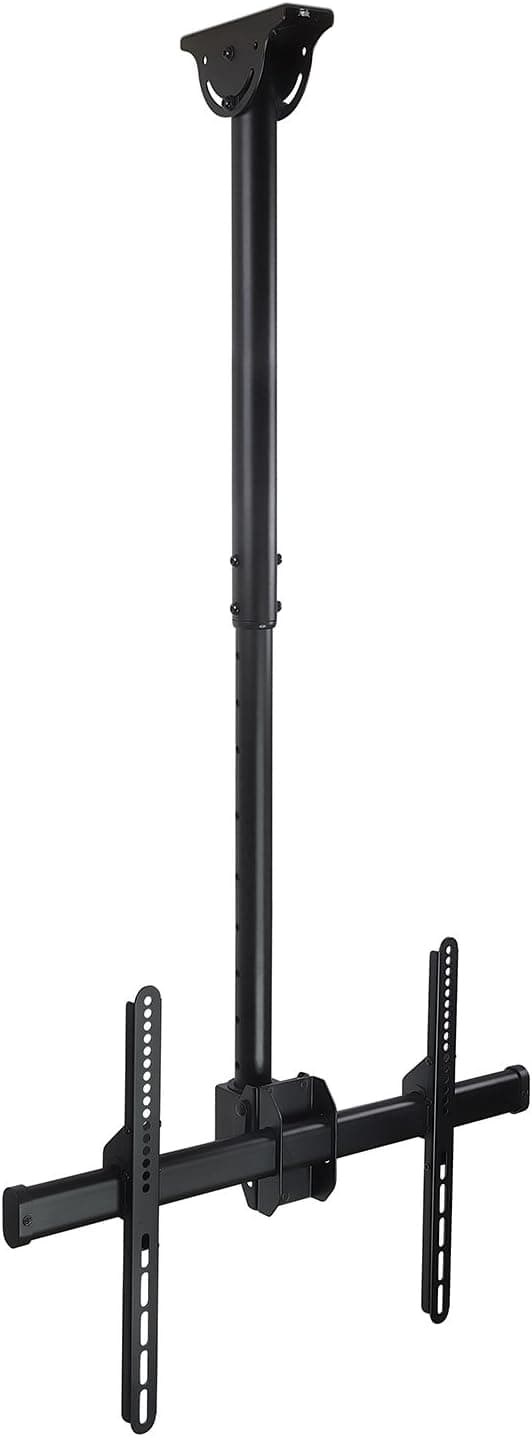
Ceiling Mount
A ceiling mount bolts into the joists or structural ceiling above and suspends the TV on a drop pole with its own tilt and swivel hardware—useful when no wall works, such as over a kitchen island or in a basement. It must anchor into real structural material, never drywall alone. Height and angle are also less convenient to change afterward; adjusting either typically means a ladder, not a quick re-tilt.

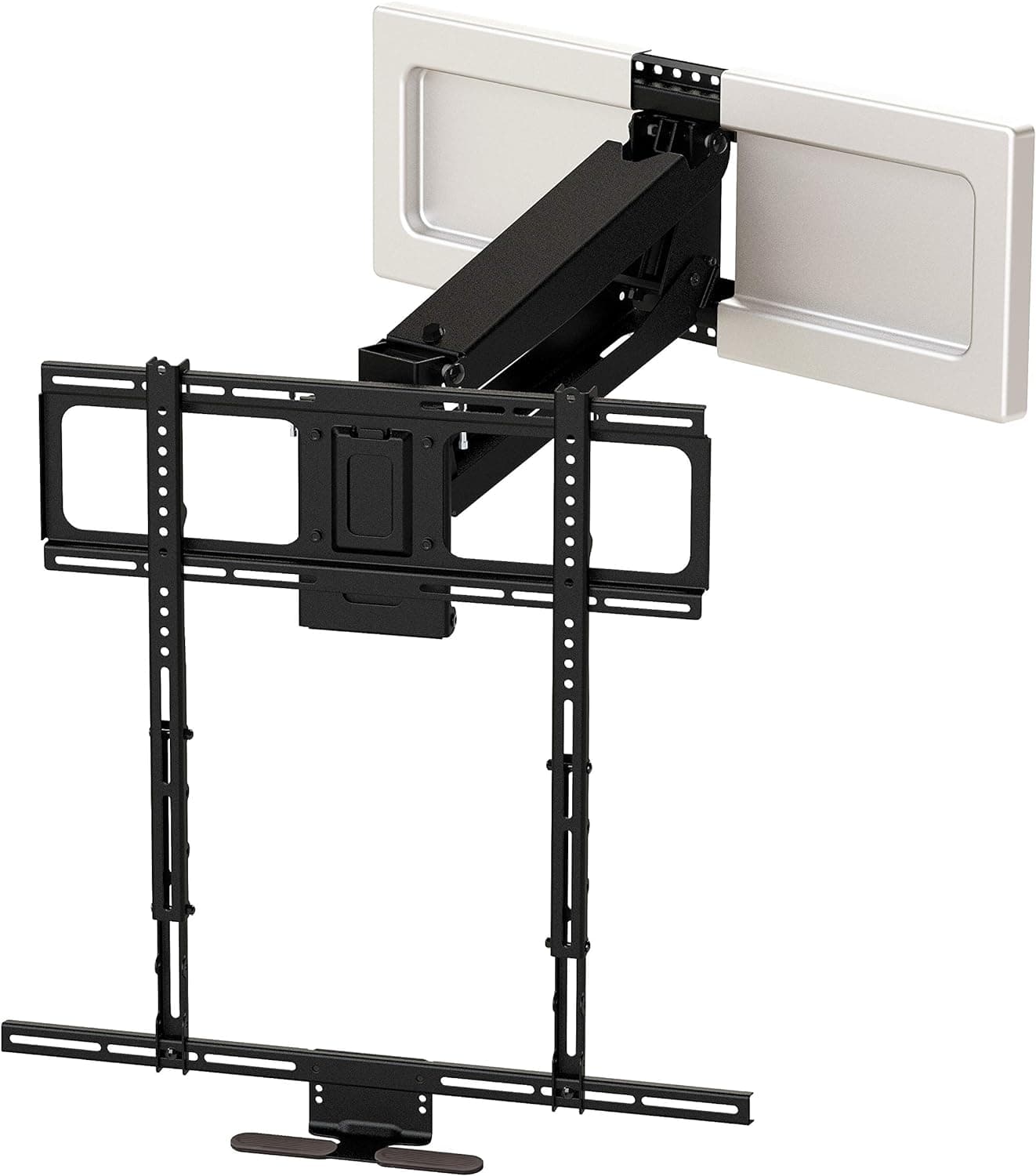
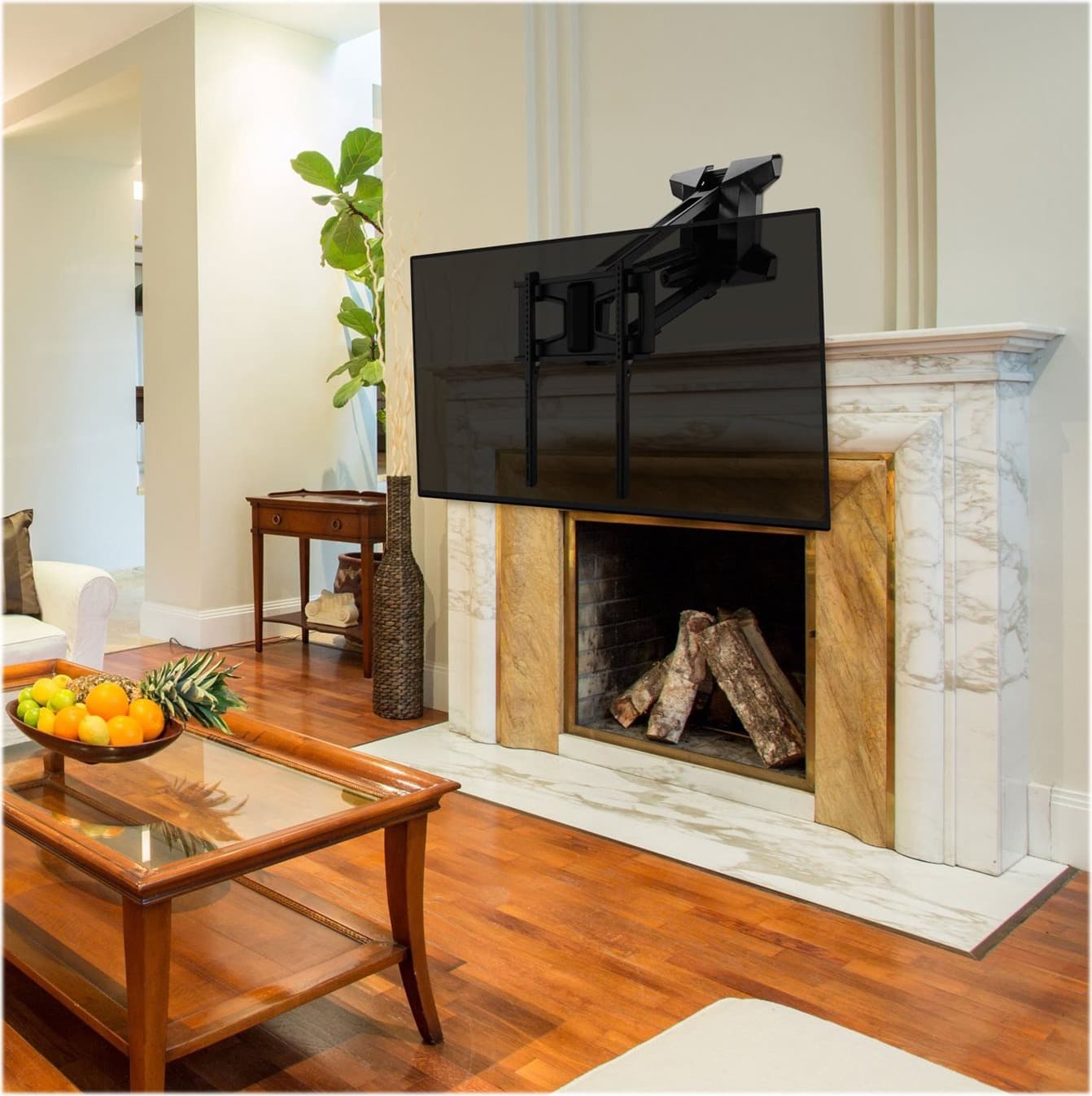
Mantel Mount
A mantel, or pull-down, mount is built for TVs installed above a fireplace: pull the handle and the screen slides forward and drops, then tilts to eye level before pushing back flush to the wall when off. It solves the classic problem of a fireplace that’s the room’s focal point but sits too high to watch comfortably. Real considerations: fireplace heat can affect a TV over time, so published clearance guidance matters, and weight limits often run lower than a standard full-motion mount.
The best bracket is the one that fits the TV, the wall, and how the room is actually used. Choose flat for a stable, straight-ahead view; tilting when the TV sits above eye level; full motion for multiple seating areas or a corner; ceiling when no wall will work; and mantel to bring a fireplace TV down to comfortable viewing height. Confirm weight, VESA pattern, and wall structure before installation—compatibility on paper doesn’t guarantee a safe mount.
Sources and further reading
Ready to plan your installation?